Différence des aptitudes, handicap et inclusion
Cette page propose diverses ressources pour enseigner aux élèves la différence des aptitudes, les handicaps et l’inclusion, y compris une liste de l’inclusion, des ressources téléchargeables, des liens et des vidéos utiles, ainsi que des expériences personnelles de personnes présentant des handicaps ou des différences d’aptitudes. Regardez la vidéo d’introduction pour en savoir plus sur cette section et son importance.
Vous vous demandez peut-être ce que signifie l’expression « différence des aptitudes » ! À la Société sans stigmatisation, nous comprenons l’importance du vocabulaire. Certaines personnes préfèrent utiliser le mot « handicap », tandis que d’autres préfèrent « différence des aptitudes ». Si vous n’êtes pas sûr du terme à utiliser, il est préférable de le faire correspondre à celui de votre interlocuteur ou interlocutrice. Vous pouvez leur demander lequel ils/elles préfèrent !

Ressources téléchargeables sur les différences d’aptitudes, les handicaps et l’inclusion

Cliquez ici pour une version imprimable.

Cliquez ici pour une version imprimable.
Ressources téléchargeables – Programme scolaire de la Fondation Rick Hansen
La Société sans stigmatisation est fière de s’associer à la Fondation Rick Hansen, créée en 1988. Depuis près de trois décennies, la FRH sensibilise le public, fait changer les attitudes et finance les recherches sur les lésions médullaires et les soins qui s’y rattachent. Aujourd’hui, environ un Canadien sur cinq s’identifie comme une personne ayant un handicap, et ce chiffre continue d’augmenter avec le vieillissement de la population. La FRH s’efforce d’éliminer l’un des obstacles les plus importants auxquels les personnes ayant un handicap ont encore à faire face : les obstacles physiques dans les endroits où nous vivons, travaillons, apprenons et jouons.
Ces ressources informatives ont été créées par la Fondation Rick Hansen.
N’hésitez pas à les utiliser dans vos classes pour approfondir la sensibilisation et la compréhension afin de briser la stigmatisation envers les handicaps.
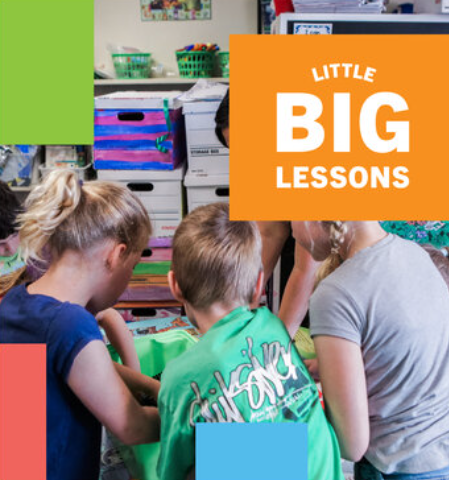

BD sur la différence des aptitudes et l’inclusion.

Guide de littératie en santé mentale axé sur l’autisme

Le Guide de littératie en santé mentale axé sur l’autisme a été rédigé par le groupe AM-HeLP (Autism Mental Health Literacy Project).
Cette précieuse ressource fournit des informations utiles sur les besoins des adultes autistes en matière de santé mentale. Ce guide a été élaboré en consultation avec des adultes autistes, des parents et des frères et sœurs de personnes ayant une expérience vécue de l’autisme. Des adultes vivant avec l’autisme partagent leurs expériences en matière de santé mentale et donnent des idées sur ce qui est nécessaire pour soutenir et promouvoir leur bien-être.
Cliquez ici pour consulter le guide !
Liste de l’inclusion
Utilisez-vous un langage inclusif ?
Pour avoir accès à cette ressource, inscrivez-vous dès aujourd’hui.
Si vous êtes déjà inscrit, veuillez vous connecter.
Faites-vous des suppositions sur les gens avant de les connaître ?
Pour avoir accès à cette ressource, inscrivez-vous dès aujourd’hui.
Si vous êtes déjà inscrit, veuillez vous connecter.
Valorisez-vous et encouragez-vous vos pairs ?
Pour avoir accès à cette ressource, inscrivez-vous dès aujourd’hui.
Si vous êtes déjà inscrit, veuillez vous connecter.
Gardez-vous l’esprit ouvert ?
Pour avoir accès à cette ressource, inscrivez-vous dès aujourd’hui.
Si vous êtes déjà inscrit, veuillez vous connecter.
Pratiquez-vous la compassion ?
Pour avoir accès à cette ressource, inscrivez-vous dès aujourd’hui.
Si vous êtes déjà inscrit, veuillez vous connecter.
Êtes-vous à l’écoute de vos ami(e)s et de votre entourage ?
Pour avoir accès à cette ressource, inscrivez-vous dès aujourd’hui.
Si vous êtes déjà inscrit, veuillez vous connecter.
*Cette ressource a été révisée et est soutenue par Erika Cedillo, Ph. D., de Inclusion BC.
Cartes de conversation sur la différence des aptitudes, les handicaps et l’inclusion
Vous trouverez ci-dessous nos « cartes de conversation » pour vous aider à démarrer votre conversation avec les élèves sur la diversité des handicaps et l’inclusion.
1. Regardez simplement une carte et lisez la question au recto.
2. L’autre personne propose une réponse.
3. Discutez ensuite de la réponse ensemble.
What language can we use around the diversely-abled/disabled community?
The prefix “dis” in disability means “the opposite of.” This indicates that disability is the opposite of the word ability. The word disability makes us focus on what people with disabilities can’t do, instead of what they CAN do. Some folks find this disempowering. Diverse-ability means that we all have different abilities, but a certain group of people isn’t more able than the other. Regardless of this, some folks still prefer to use the term “disabled” or “disability”. They feel empowered by these terms and feel that they are the most inclusive. When it comes to language, it’s always best to ask what language people prefer!
What does inclusion mean and why is it important?
Inclusion means that within a physical space or social setting, everyone is included no matter their gender, ethnicity, sexual orientation, age, diverse-abilities or religion.
Inclusion is important because when we exclude others, it is usually because we are stigmatizing them. Being excluded makes people feel lonely or less worthy than others others. The truth is, everyone is worthy and deserves to be treated with respect and without stigma.
Inclusion is important because when we exclude others, it is usually because we are stigmatizing them. Being excluded makes people feel lonely or less worthy than others others. The truth is, everyone is worthy and deserves to be treated with respect and without stigma.
What are developmental diverse-abilities?
Developmental disabilities are a group of conditions that involve impairment in learning, language, or behavioural areas. These conditions begin early on in life. They may impact daily functioning and they usually last throughout one’s lifetime.
Some developmental disabilities include autism spectrum disorder, intellectual disabilities, and learning disabilities.
Some developmental disabilities include autism spectrum disorder, intellectual disabilities, and learning disabilities.
What are sensory diverse-abilities?
Someone with a sensory diverse-ability has different abilities to do with one or more of their senses (touch, taste, sight, hearing, smell). Sensory diverse-abilities include vision impairment, people who are hard of hearing, and Sensory Processing Disorder (SPD).
Voir plus de cartes
What are learning diverse-abilities?
Someone with a learning diverse-ability finds learning more difficult than others. This doesn’t make them less able, however! They may just need extra support in reading, writing and spelling. Examples of learning diverse-abilities are dyslexia (difficulty reading) and dyscalculia (difficulty with math).
What are physical diverse-abilities?
Someone with a physical diverse-ability has different mobility challenges. This means that they may move and get around in a unique way and may need extra support. Examples of physical diverse-abilities include brain injuries and amputation.
What are the kinds of stigma that people with diverse-abilities (disabilities) face?
People with diverse-abilities may face stigma related to social avoidance, stereotyping, discrimination, condescension, blaming, and internalization. See the following cards for definitions.
What is social avoidance stigma?
People with disabilities may be left out of social activities. They may find that friends become more distant after they develop a disability. People may be wary to make eye contact or start a conversation with someone who has a noticeable disability.
What is stereotyping stigma?
People may assume those with disabilities are helpless, unable to take care of themselves, or unable to make their own decisions. For example, people with a speech impairment may be assumed to have other disabilities they don’t have, such as an intellectual disability. These assumptions are negative and untrue.
What is discrimination stigma?
People with disabilities may be denied jobs, housing, or lose opportunities because of stereotypes about disabilities.
What is condescension stigma?
People with disabilities are overprotected due to others thinking they are helpless. They are not helpless, of course.
What is blaming stigma?
People may be blamed for their disability, or they may be accused of using their disability to gain unfair benefits.
What is internalization stigma?
People with disabilities may begin to accept negative beliefs about their disability and consequently feel ashamed or embarrassed about it.
What can you do if you find yourself the target of classmates’ stigma?
Rather than physically fight back, look for ways to educate your classmates who may not understand mental illness, and you can let them know how their behaviours are affecting you. Contact a teacher or school counsellor for help in this matter.
What is stigma against the LGBTQ2S+ community? How can we help change this?
Stigma against LGBTQ2S+ is a form of social stigma against people because of their gender or sexual orientation. We can help change this by speaking out if you witness bullying of LGBTQ2S+ youth and going to an adult such as a teacher or a school counsellor, or organizing ways to educate others on LGBTQ2S+ issues.
What is gender identity? Why is there stigma against those who have a different gender identity?
Gender is a social construct and is a spectrum. A social construct means that it was a concept created by society. There is a difference between sex and gender: sex is assigned at birth as female or male based on biology, and gender is each person’s sense of being a girl, a boy, both, neither or anywhere along the gender spectrum. Gender is a spectrum because each person’s experience is unique, there are no set boundaries. Gender identity is each person’s own experience of gender. Pronouns include she/her, he/him, they/them, etc.
Why is there stigma against those who have a different gender identity?
There may be stigma, discrimination and violence against people because of their gender identity if people lack education, understanding and awareness around this topic. We must learn to respect everyone’s individual gender identity.
We’ve been hearing so much about racism in the media. What can we do to help fight racism?
First, you can educate yourself about what racism looks like in our society. You can also get involved in activism and spread the knowledge that you learn. To do so gives you a sense of control and connection with people with the same desire: end racism. It’s okay to let your child see that you, too, are reacting to these scary times.
What is the difference between racism, discrimination and prejudice?
Prejudice is when someone has certain beliefs, thoughts or feelings about a specific person or group of people. It groups people together and they are usually negative assumptions. Racism is a type of prejudice specific to race, where someone believes that a certain race is superior to a racial minority. Racism is a system that is very complicated. Discrimination is the actual act or action against a person or group of people based on prejudice.
You know, I’m just a kid. How can my voice make a difference in fighting stigma?
Every voice counts when fighting stigma. The more voices are heard, the greater the impact of those voices fighting against the negative judgment of others.
*Ces cartes de conversation ont été révisées et sont soutenues par Jake Anthony de AutismBC.
Liens utiles
- Learning Disability Society – Informations et ressources
- Liste de livres pour chaque type de handicap
- Inclusion BC – Ressources sur l’éducation inclusive
- Inclusion BC Advocacy
- Inclusive Education Canada – Guide de l’inclusion scolaire
- Boîte à outils ConnectABILITY Bridging Diversity
- Solutions adaptées aux besoins sensoriels
- AutismBC : À propos de l’autisme
- Blogue AutismBC
- Here to Help – Maladies mentales continuelles des élèves
- Trouble du spectre de l’autisme: Guide de sécurité Internet
- Supporting Minds : Guide de l’éducateur et de l’éducatrice pour la promotion de la santé mentale et du bien-être des élèves
Vidéos
Les partenaires
Diamond Foundation

ZLC Financial
Visit Website
Coast Capital Savings
Visit Website
Grant Thornton Foundation
Visit Website
United Way of the Lower Mainland
Visit Website

Autism BC
Visit Website
RISE
Visit Website
YMCA/YWCA of Vancouver Island
Visit Website
Pathways Clubhouse
Visit Website
Youthspace.ca
Visit Website
Need2: Suicide Prevention Education & Support
Visit Website
Tell My Story Challenge Foundation
Visit Website
We Matter
Visit Website
Victoria Youth Empowerment Society
Visit Website
Dash BC
Visit Website
Island Health
Visit Website
Face of Today Foundation
Visit Website
Rumie
Visit Website
Dalai Lama Center for Peace and Education
Visit Website
Heart-Mind Online
Visit Website
Together We Can
Visit Website
Thomas Sill Foundation
Visit Website
Segal Family Foundation
Visit Website
The McLean Foundation
Visit Website
Cloud Reach Inc
Visit Website
Surrey Cares Foundation
Visit Website
WCPD Foundation
Visit Website
Lohn Foundation
Visit Website
CINS
Visit Website


Réseaux sociaux